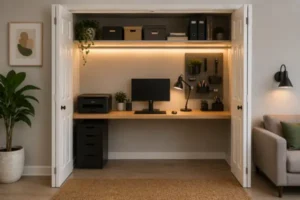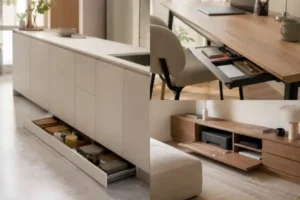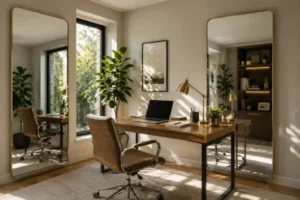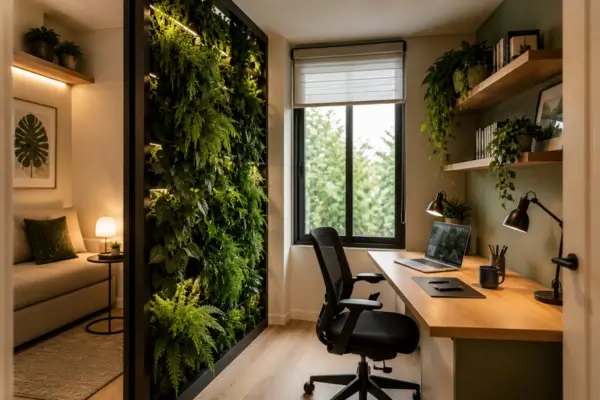
Remote work has become a lasting reality for millions of people, but the transition has not always come with ideal working conditions. For many, the “office” is still an improvised corner, a desk squeezed into the bedroom, or a small area adapted to fit daily demands.
In compact living spaces, biophilic design goes far beyond aesthetics, becoming a powerful way to improve productivity while creating a greater sense of mental balance throughout the workday.
This article explores how biophilic design can revitalize your home office, turning even the smallest setup into a high-value environment that encourages focus, organization, and a more comfortable sense of permanence during long working hours.
The Essence of Biophilia in Compact Spaces: More Than Plants, a Philosophy
Biophilia, a concept popularized by biologist Edward O. Wilson, describes the human tendency to seek connection with nature and other living systems. In a small home office, that connection becomes even more important, especially when the environment begins to create feelings of confinement, visual overload, and mental fatigue over time.
But applying biophilic principles in a compact workspace involves much more than simply adding a few plants. The goal is to create a lighter, more balanced, and functional atmosphere through natural elements that make the office feel more visually open and breathable.
This can include everything from plants and natural light to materials, circulation, and the way objects are distributed throughout the space.
Studies have shown that natural elements can help reduce stress, improve mood, and enhance concentration. In small home offices, where the line between rest and work often becomes blurred, that sense of relief can make a noticeable difference in daily life.
The environment stops feeling like a temporary corner of the house and begins to offer a stronger sense of comfort, visual clarity, and organization.
Strategic Integration: Designing with Nature
For biophilic design to truly work in a compact home office, it needs to be implemented intentionally and strategically rather than treated as simple decoration. Every natural element should contribute to both functionality and well-being without overwhelming the space.
Smart Vertical Design: Expanding the Sense of Space
In environments where horizontal space is limited, vertical organization becomes an essential ally. Floating shelves, wall niches, and pegboards allow greenery to move upward, freeing the desk surface while creating visual layers that mimic the depth and complexity found in nature.
Positioning plants at different heights creates visual movement and helps the room feel larger and more open.
Visual organization is especially important in compact offices: neutral-colored pots or natural materials help maintain focus on the plants themselves, while grouping species with similar care requirements simplifies maintenance and creates small “green zones” that naturally soften the environment.
Psychological Separation Through Greenery: Invisible Boundaries with Real Impact
One of the biggest challenges of working from home in shared spaces is the difficulty of creating clear boundaries between professional and personal life. Plants can function as organic dividers, creating visual and psychological separation without the need for rigid structures.
An open shelving unit with trailing plants, for example, can subtly signal a transition between environments while still allowing light and airflow to pass through. This subtle separation helps the brain associate the area with focus and productivity, making it easier to mentally transition between work and personal life.
Environmental psychology also suggests that entering a space framed by natural elements can help reduce stress levels, creating a transition ritual that supports both performance and relaxation.
Thoughtful Plant Selection: Choosing Species That Support the Space
Choosing the right plants is one of the foundations of biophilic design in small environments. The goal is not only visual beauty, but also practicality and adaptability. Prioritize species that thrive indoors, require minimal maintenance, and grow in controlled ways.
Plants such as the ZZ Plant, Snake Plant, and Peace Lily are excellent choices. The ZZ Plant is highly resilient and adapts well to areas with limited natural light, making it ideal for darker corners. The Snake Plant, with its vertical growth pattern, occupies very little space and is widely recognized for its air-purifying qualities, helping remove common indoor toxins.
Succulents and cacti are perfect for compact surfaces because they require very little watering and maintain their shape for long periods. The Peace Lily, beyond its elegant appearance, visibly signals when it needs water, making plant care easier to manage within a busy routine.
It is also wise to avoid species that shed excessive leaves or flowers, since additional mess can quickly become distracting in a micro-office setup.
Innovative Maintenance Solutions: Technology Supporting Nature
Plant care should never become a burden, especially in a working environment. Self-watering planters offer an intelligent solution through built-in reservoirs that gradually deliver moisture through capillary action, reducing the frequency of watering while eliminating trays that often collect dirt and stagnant water.
This approach minimizes the risk of spills near electronics and documents, helping maintain a consistently clean and organized workspace. Magnetic planters and suspended containers also provide creative alternatives by using unconventional surfaces or completely freeing up desk areas, allowing greenery to appear almost weightless within the room.
Light and Flow: The Essential Balance of Biophilic Ergonomics
Biophilic design should complement ergonomics, never compromise it. Natural light is essential not only for human well-being but also for plant health. Larger plants should be positioned strategically so they do not block sunlight from reaching the desk or computer screen.
In spaces with limited daylight, discreet grow lights can help plants thrive without disrupting the overall atmosphere. It is equally important to ensure that pots and foliage do not obstruct movement, chair mobility, or drawer access.
In micro-environments, maintaining fluid circulation is crucial for preventing feelings of claustrophobia. Greenery should encourage calmness and productivity rather than becoming a physical obstacle within the workspace.
Investing in Performance and Well-Being
Integrating biophilic design into a home office goes far beyond decoration; it becomes a conscious investment in cognitive performance and mental well-being. Nature has a well-documented ability to restore attention, reduce mental fatigue, and stimulate creativity — qualities that are increasingly valuable in an age dominated by hyperconnectivity and constant notifications.
By applying principles such as smart vertical organization, psychological separation through greenery, thoughtful plant selection, innovative maintenance solutions, and careful attention to light and circulation, even a limited corner can evolve into a highly functional and inspiring environment.
Organization and nature naturally complement each other: an orderly space helps clear the mind, while greenery brings a quieter and more restorative atmosphere to daily work. Start with a single plant and pay attention to the difference this connection can bring to your daily routine. Ultimately, productivity and well-being tend to flourish wherever nature is given room to exist.