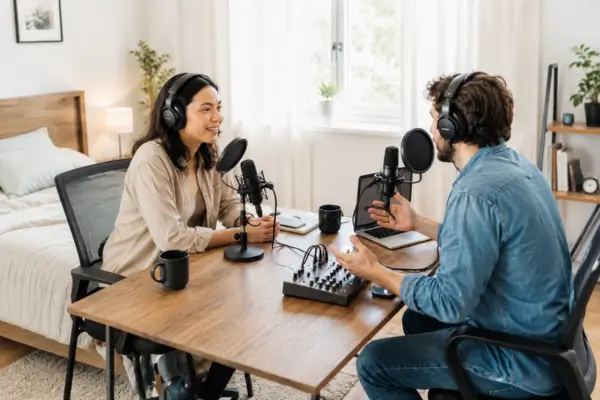
Creating audio content from home sounds comfortable at first. But in reality, many podcasters and audio creators spend hours recording in improvised setups, poorly adjusted chairs, and spaces that were never meant for long recording sessions. Over time, shoulder pain, neck stiffness, vocal fatigue, and mental exhaustion can slowly become part of the routine.
The problem is that these issues usually build up gradually. Small mistakes in microphone placement, posture, or even workspace organization can create daily physical strain without the creator fully noticing it.
Professionals who can record for hours without tension understand something important: comfort and performance are directly connected to how a home workspace is arranged. Small adjustments to your setup, breathing, and recording environment can completely change the experience, reducing physical strain while improving vocal quality during long sessions.
The Diaphragm and Posture: What Professionals Do to Keep Their Voice Strong
Many creators assume the voice comes only from the throat. In reality, real vocal support comes from the diaphragm. When it works properly, the voice becomes stronger, clearer, and more stable without requiring unnecessary effort.
Poor posture interferes directly with this process. Rounded shoulders, a collapsed chest, and an unbalanced spine restrict breathing and force the throat to compensate for the lack of respiratory support. This is one of the most common causes of vocal fatigue during long recording sessions.
Experienced creators focus on something simple: keeping the body aligned so breathing can happen naturally. This reduces muscular tension and improves vocal control during extended recordings.
Diaphragmatic breathing also helps preserve energy. Simple breathing exercises increase body awareness and improve airflow, reducing hoarseness and unnecessary vocal strain.
The Setup Podcasters Use to Record for Hours
Many beginner creators underestimate how much their setup affects physical endurance during recording sessions.
The chair, for example, is one of the most important elements. When it is poorly adjusted, the entire body starts compensating: shoulders rise, the neck tightens, and breathing becomes less efficient.
A few simple adjustments can completely change the experience:
- feet flat on the floor;
- knees positioned between 90 and 100 degrees;
- hips slightly higher than the knees;
- natural spinal support.
This positioning reduces lower back strain while improving breathing capacity.
The chair’s armrests also matter more than most people realize. Professionals avoid leaving their shoulders unsupported for hours at a time. Proper forearm support helps relax the trapezius, neck, and cervical area.
Another detail many creators overlook is monitor height. When the screen sits too low, the neck naturally moves forward, increasing shoulder tension. Ideally, the top edge of the monitor should stay close to eye level.
Small adjustments like these prevent accumulated strain and make long sessions significantly more comfortable.
The Boom Arm: One of the Simplest Upgrades in Professional Studios
One of the most common mistakes in home studios is adapting your body to the microphone instead of adapting the microphone to your body.
Constantly leaning forward to reach the mic creates ongoing tension in the neck, shoulders, and lower back. After a few hours, this starts affecting not only physical comfort but also vocal quality.
That is why a boom arm is one of the most common accessories found in professional setups.
It allows the microphone to stay in the ideal position, usually around 4 to 6 inches from the mouth, without forcing the creator to lean forward during recordings.
This simple adjustment reduces the so-called “turtle posture,” keeps the spine in a more neutral position, and helps preserve energy throughout long sessions.
It also improves voice capture and frees up desk space, making the environment cleaner and more functional.
Your Room Acoustics Affect Your Body More Than You Think
Many creators associate acoustics only with audio quality. But acoustics also directly affect physical and vocal strain.
There is a phenomenon called the Lombard Effect: in noisy or echo-filled environments, people naturally raise their voices without realizing it.
During long recordings, this accelerates vocal fatigue and increases muscular tension.
Professionals minimize this issue by making basic acoustic improvements to the room:
- rugs;
- curtains;
- acoustic foam;
- sound-absorbing surfaces.
Closed-back headphones also help because they allow creators to hear their own voice clearly without needing to speak louder.
Another important factor is auditory fatigue. After listening to audio continuously for long periods, the brain starts becoming overloaded. This increases mental stress and can create physical tension throughout the body.
That is why short periods of silence during the work routine are part of a more professional recording process.
Mental Comfort Is Part of Performance Too
Experienced creators understand that discomfort is not only physical.
Messy cables, poor lighting, hard-to-reach equipment, and disorganized setups increase mental fatigue during recordings.
When the environment constantly demands extra effort just to stay focused and organized, there is less energy left for creativity, improvisation, and natural communication.
That is why professional setups usually prioritize simplicity and practicality.
Every piece of equipment has a defined place. The microphone is always ready to use. Controls stay within easy reach. Lighting reduces visual strain.
All of this lowers cognitive overload and makes it easier to enter a creative flow state.
The Studio Environment Influences More Than You Realize
Very few creators pay attention to the studio’s microclimate.
But temperature, humidity, and lighting directly affect comfort during recordings.
Dry air can irritate and dry out the vocal folds, while colder environments tend to increase muscular tension.
Professionals usually aim for:
- stable temperatures;
- soft lighting;
- good air circulation;
- balanced humidity levels.
These details help maintain vocal quality, concentration, and physical comfort for much longer periods.
| Feature | Ideal Environment |
| Acoustics | Minimal echo and low noise |
| Humidity | Between 40% and 60% |
| Temperature | Stable and comfortable |
| Lighting | Soft and balanced |
| Organization | Clean and functional |
Vocal Warm-Ups and Hydration: Small Habits That Make a Huge Difference
Creators who rely on their voice rarely start long recording sessions without preparation.
Proper hydration helps maintain vocal flexibility and reduces strain on the vocal folds. Ideally, water intake should stay consistent throughout the day, especially before recording sessions.
Vocal warm-ups also play an important role.
Simple exercises like lip trills, deep breathing, and techniques such as Lax Vox help prepare the vocal muscles before extended recordings.
Another important habit is managing physical and mental stress. When the body enters a tense state, breathing becomes shallow and the shoulders automatically tighten.
That is why many professionals use intentional pauses and breathing exercises to maintain relaxation and vocal control throughout long sessions.
Ultimately, creators who can record for hours without losing energy understand one essential thing: vocal performance depends on much more than the voice itself.
Your whole body plays a role in the recording process.
When posture, breathing, workspace organization, and setup positioning work together, recording sessions feel lighter, the voice becomes more consistent, and physical strain stops limiting creativity.
Small adjustments can completely transform the recording experience.
More comfort leads to better focus, more energy, stronger recordings, and greater longevity for anyone who relies on their voice professionally.