Working from home has become a reality for many people, bringing greater flexibility and freedom from long commutes. Yet behind that convenience lies a quieter challenge: prolonged inactivity, often intensified by the limited space available in modern homes.
Spending hours in the same position, frequently using unsuitable chairs or improvised setups, can gradually lead to physical discomfort and daily fatigue.
The good news is that solving this problem does not require a complete renovation or a large dedicated office. Height-Adjustable Desks have emerged as a transformative solution, even in compact environments.
This article explores how strategically alternating between sitting and standing can help reduce daily strain, improve comfort, and support productivity in small home offices. The key is understanding that small adjustments to both the workspace and daily habits can create a meaningful impact on overall well-being and professional performance.
How Movement Helps Sustain Productivity
Working from home often means spending long stretches of time in front of a screen, and over time that routine can create a sense of physical stagnation that affects more than just the body. Difficulty concentrating and the familiar afternoon drop in energy are common experiences for people who remain seated for most of the day.
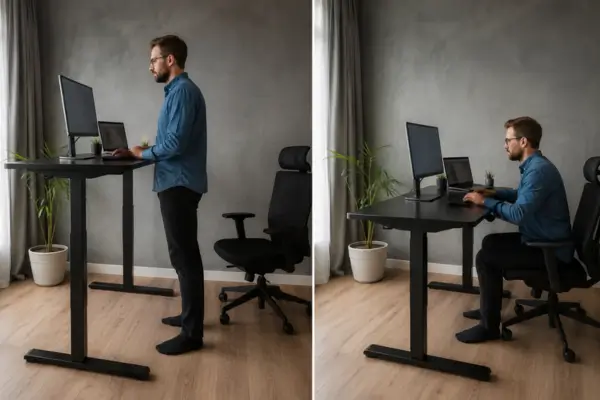
This is where alternating between sitting and standing, made easier through adjustable desks, becomes especially valuable. Beyond simple physical comfort, changing posture throughout the day helps break the monotony of staying in the same position for hours. That shift alone can make the routine feel more dynamic and mentally refreshing.
Many people notice that standing for short periods during focused tasks creates a subtle feeling of renewed attention. The simple act of moving, adjusting posture, and changing perspective can help the workday feel less repetitive and mentally draining.
Instead of remaining static from morning to evening, the body stays more engaged, which naturally influences energy levels and overall focus during long work sessions.
Choosing the Right Adjustable Desk for a Small Space
In a compact home office, every inch matters. Choosing a height-adjustable desk should be a strategic decision that prioritizes functionality without overwhelming the available space. One of the first things to consider is size.
Narrower desktops with reduced depth, such as 80 x 60 cm models, often fit naturally into smaller corners or against limited wall space.
Stability is equally important. A sturdy structure helps prevent unwanted movement or wobbling, keeping the workspace secure during height transitions. The adjustment mechanism also deserves attention. Electric desks provide smoother transitions and added convenience with the touch of a button, while manual versions are usually more affordable but require more physical effort during adjustments.
Design also plays a meaningful role in how the desk integrates into the room. Minimalist models with neutral colors and clean lines tend to create a lighter visual presence, helping smaller environments feel more open instead of overcrowded. Before purchasing, careful planning and accurate measurements are essential.
It is important to evaluate circulation space, nearby furniture, and the opening range of drawers or doors around the setup.
Additional features can make a significant difference in compact environments. Lockable wheels allow the workspace to be repositioned when necessary, while side hooks for headphones or bags help free up valuable surface space.
Built-in trays and small storage solutions can also improve organization by making better use of vertical and hidden areas. In smaller home offices, the ideal desk becomes more than a simple piece of furniture — it functions as an intelligent extension of the workspace itself.
Once the adjustable desk has been properly selected and positioned, the next step becomes even more important: learning how to interact with it correctly throughout the day. Proper ergonomic setup is what truly maximizes the benefits of posture variation.
Creating an Ergonomic Setup for Sitting and Standing
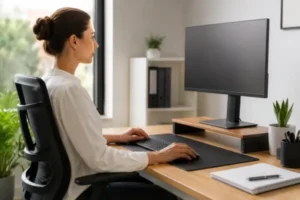
The effectiveness of a height-adjustable desk depends heavily on proper ergonomic positioning in both seated and standing modes. When sitting, the ideal posture involves keeping the feet fully supported on the floor or on a footrest, with the knees positioned at roughly a 90-degree angle.
The elbows should stay close to the body at a similar angle, allowing the forearms to rest comfortably on the desk surface. The monitor should remain at eye level to avoid excessive neck movement, while the chair should properly support the back throughout the day.
When standing, body weight should be distributed evenly, with a slight bend in the knees to avoid locking the legs. The monitor still needs to remain at eye level, and the keyboard and mouse should allow the arms to stay relaxed without forcing the shoulders into uncomfortable positions.
Additional ergonomic accessories can further improve the experience. Adjustable monitor arms help maintain proper screen height regardless of desk position. Ergonomic keyboards and mice may help reduce tension during long work sessions, especially for people who spend many hours typing or editing.
For standing sessions, anti-fatigue mats are especially useful because they provide cushioning while encouraging small natural foot movements that help reduce discomfort over time.
Smooth transitions between positions are also important. The goal is to make posture changes feel natural rather than disruptive. While preferences vary from person to person, many people find that alternating regularly throughout the day feels more comfortable than remaining in a single position for extended periods.
Being able to adjust the desk quickly without disrupting the workflow helps make posture changes feel natural throughout the day.
Once the desk setup feels comfortable, another common challenge in small, flexible workspaces becomes clear: cable management. Keeping the workspace visually organized becomes essential for both functionality and comfort.
Cable Management and Organization: Keeping the Workspace Under Control
The constant movement of an adjustable desk, while beneficial for daily comfort, can quickly turn a workspace into a tangled collection of cables if not properly managed. Because the desk changes height throughout the day, cables need enough flexibility to move freely without creating visual clutter or safety concerns.
Fortunately, a few practical solutions can make a major difference. Cable trays installed underneath the desk help conceal and guide wires while keeping them protected and out of sight. Velcro cable ties are versatile and make it easier to group cables together in an organized way, simplifying maintenance whenever devices need to be changed or repositioned.
Spiral cable organizers can also help combine multiple cords into a cleaner and more unified setup, while cable boxes are useful for hiding power strips and bulky adapters that would otherwise contribute to visual clutter.
Keeping a clean setup often comes down to small details: grouping cables by function, labeling them discreetly, and leaving enough slack to allow smooth desk movement without pulling or stretching the wires. An organized workspace does more than improve aesthetics — it also helps the environment feel calmer and easier to navigate during busy workdays.
Beyond the Desk: Making Movement Part of the Routine
A height-adjustable desk is a powerful tool, but its real value appears when posture variation becomes a natural part of the work routine itself. Creating that habit often requires simple strategies that encourage consistency without making the process feel forced.
For some people, setting reminders on a phone or using productivity apps can help establish regular posture changes during the day. Small active breaks also contribute to this rhythm, whether that means standing up to grab water, stretching briefly between tasks, or even taking calls while standing instead of sitting.
The goal is not to follow a rigid formula, but to create a more flexible and responsive work rhythm that feels sustainable in everyday life. Over time, alternating between sitting and standing tends to feel less like a deliberate effort and more like an instinctive adjustment based on comfort, energy, and focus.
Ultimately, small changes to the workspace and daily routine can make the workday feel more comfortable, organized, and sustainable. Even in compact home offices, thoughtful adjustments can transform the environment into a space that feels more functional, adaptable, and supportive throughout the day.
meta e slug e paavra chave